
What Science Reveals About Massage and Detoxification
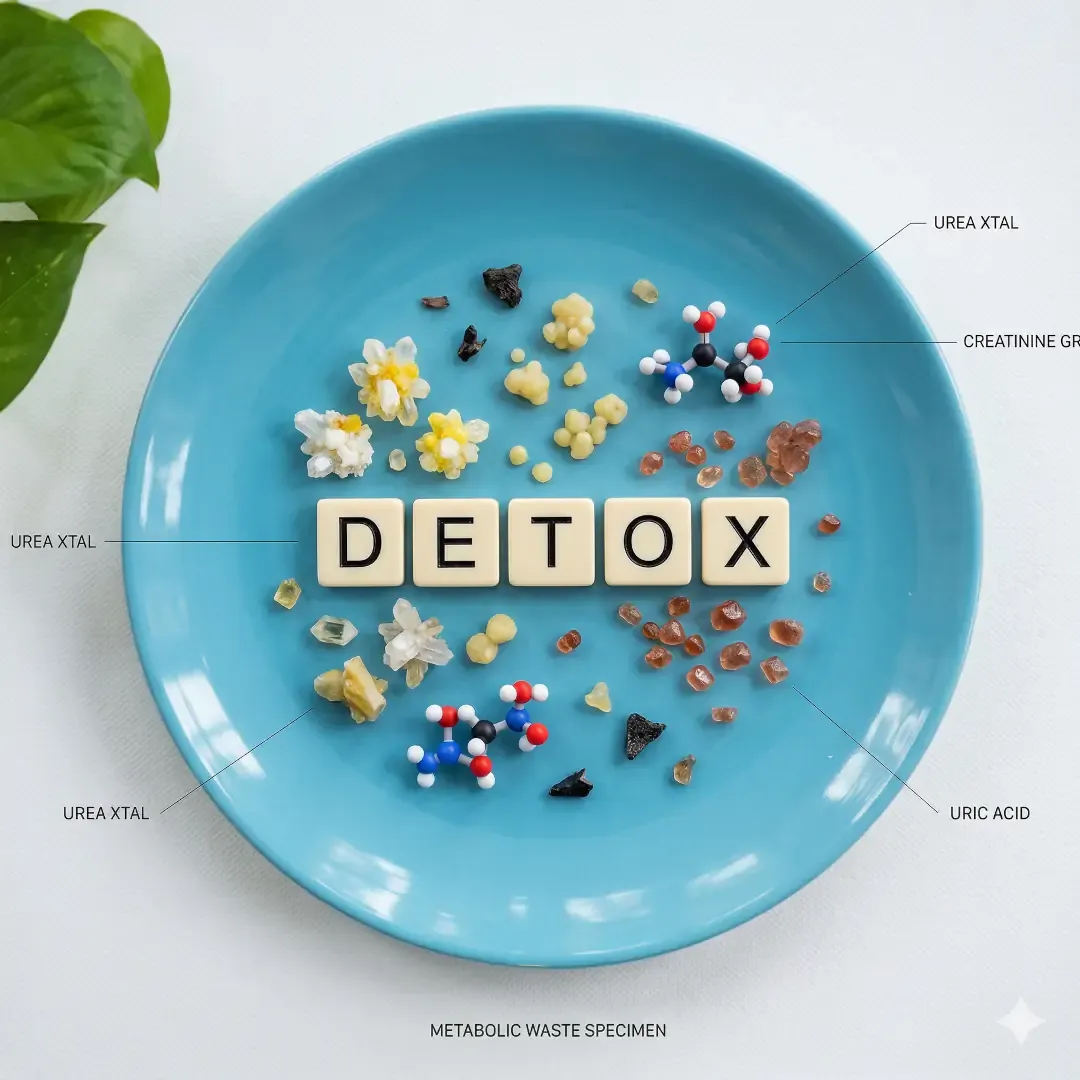
The Truth About Massage and Detoxification: What Science Actually Shows
Separating wellness facts from fiction
Let's address a common misconception: If you've ever left a massage feeling refreshed and light, you may have been told that your body just released "toxins." This explanation is widespread in wellness circles, but it isn't an accurate description of how the body works or the effects that massage has on the body.
The reality is far more interesting.
Massage provides genuine health benefits. However, they are not detoxifying your body in the biochemical sense. Your liver, kidneys, lungs, and digestive system handle that task continuously and effectively. Understanding what massage actually does can help you appreciate its real value without relying on outdated myths.
The Problem with "Toxins"
The term "toxins" is rarely defined in massage contexts. It suggests harmful substances being purged from the body—but which substances, specifically? Environmental pollutants? Metabolic byproducts?
Your body possesses dedicated systems for processing and eliminating waste. These operate independently of massage therapy. They require adequate hydration, nutrition, sleep, and overall health—not manual manipulation of soft tissue.
What Massage Actually Accomplishes
Research indicates that massage provides measurable benefits through several well-documented mechanisms:
1. Nervous System Regulation Massage appears to influence autonomic nervous system balance, shifting the body from sympathetic activation ("fight or flight") toward parasympathetic dominance ("rest and digest"). This can slow your heart rate, lower stress hormones like cortisol, and help you feel calmer—benefits that are valuable on their own without needing to call it "detox."
2. Pain Modulation Your body has a clever system for managing pain signals. Think of your spinal cord as a gate that controls what messages reach your brain. This gate can only let so many signals through at once.
When you get a massage, the pressure and movement create strong touch signals that travel quickly to your spinal cord. These fast signals crowd out the slower pain signals trying to reach your brain. It's like a busy doorway—only so many people can get through at once. The touch signals get priority, so fewer pain messages make it to your brain.
The pain is still there in your muscle. But because your brain receives fewer pain signals, you feel less discomfort. No detox required. Just your nervous system being cleverly distracted.
This is why you instinctively rub your elbow after bumping it—the pressure creates competing signals that partially block pain messages. During a massage, this sustained sensory input keeps pain signals from reaching your brain as prominently. But the effects don't stop when the massage ends. By calming the nervous system and reducing muscle tension, massage can create lasting changes that lower pain levels. It's not that the underlying problem instantly disappears, but your body's response to it changes—and that relief can stick around long after you leave the table.
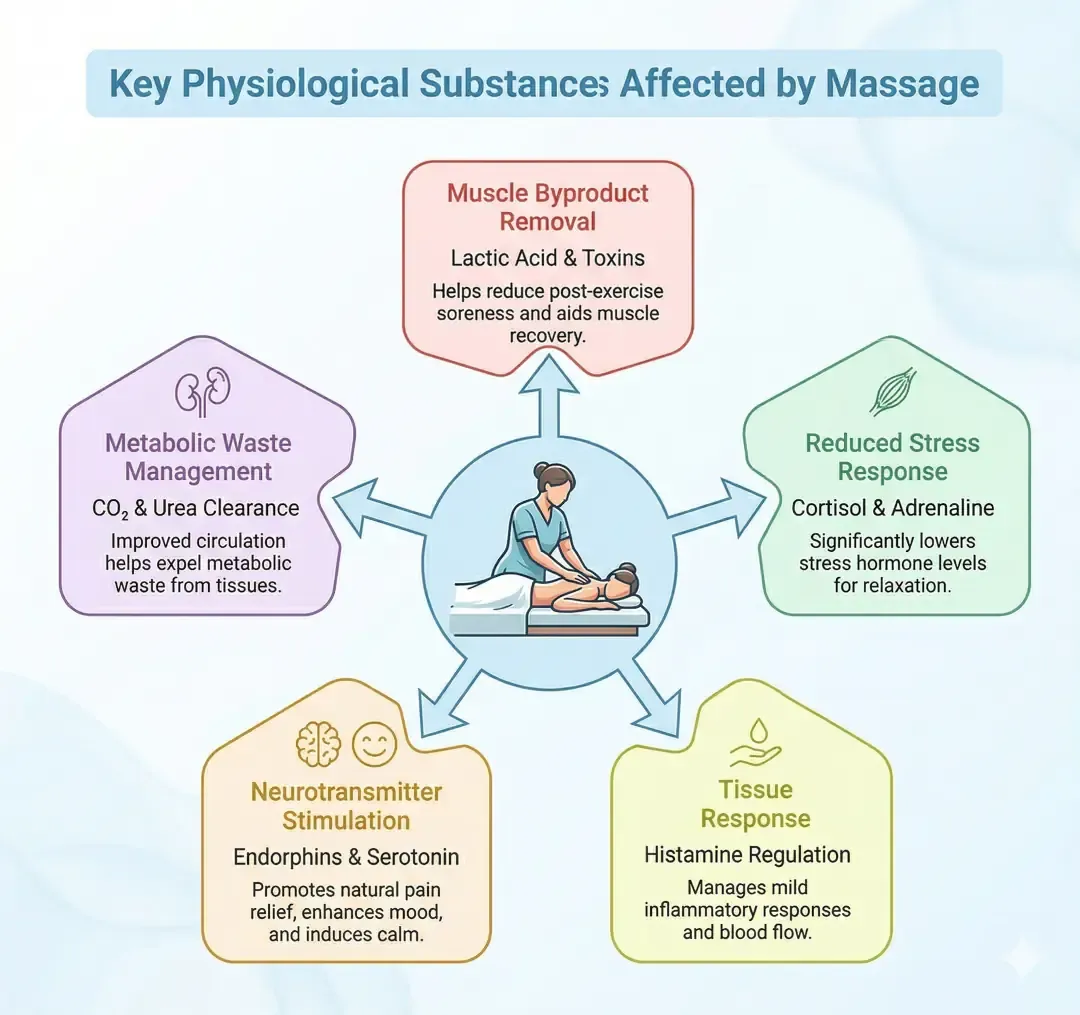
3. Circulatory and Fluid Dynamics Massage temporarily increases local blood flow and may assist with fluid movement in tissues. This is not detoxification, but rather enhanced circulation that supports normal physiological processes already underway, such as the delivery of oxygen and nutrients to tired muscles.
4. Muscle Tone and Tension Release. By addressing areas of increased muscular tension or "guarding," massage can improve range of motion, reduce discomfort, and enhance body awareness. When a muscle is no longer stuck in a state of chronic contraction, local metabolic waste (like lactic acid) can be cleared more naturally by your own blood flow.
Lymphatic Drainage: A Special Case
Manual Lymphatic Drainage (MLD) warrants a separate discussion. This is a specific, clinically developed technique that uses light, directional strokes to support lymphatic flow—particularly in cases of lymphedema or post-surgical swelling.
MLD differs substantially from general relaxation massage. While it assists the lymphatic system in moving fluid, it does not replace hepatic or renal function, nor does it purge undefined toxins from tissue. The lymphatic system operates continuously; MLD provides targeted support when indicated.
Explaining the Post-Massage Bathroom Visit
Many clients need to use the bathroom after a massage. This has often been wrongly explained as "flushing out toxins." The real reason is simpler and more interesting.
When you're stressed, your body is in "fight or flight" mode. In this state, your bladder never fully relaxes, so you end up making lots of small trips to the toilet without ever feeling quite done. Massage calms your nervous system and switches you into "rest and digest" mode. Your bladder can finally fill properly and empty.
Additionally, lying horizontally and relaxing encourages fluid to move from the limbs back toward the heart, which signals the kidneys to increase urine production. That urgent post-massage bathroom visit isn't toxins leaving your body—it's just your body working normally again, free from the tension that stress creates.
Why Accurate Language Matters
The detoxification narrative persists because it feels intuitively satisfying—like something dramatic and cleansing has occurred. However, massage offers substantial, evidence-based benefits that require no embellishment:
- Stress reduction
- Improved parasympathetic tone
- Enhanced body awareness
- Temporary relief from muscular tension
- Support for normal circulatory and lymphatic function
These effects are meaningful. They support health and well-being. We can validate massage therapy without invoking unsupported biochemical claims.
Practical Takeaways
- Hydration after massage supports normal physiological function, but does not "flush toxins" more rapidly
- Your body's detoxification systems operate continuously and are not dependent on manual therapy
- Different techniques serve different purposes—general massage and Manual Lymphatic Drainage are not interchangeable
- The benefits you feel are real, even if the explanation you've heard is incomplete
Massage therapy influences the nervous system, modulates pain, and supports relaxation and recovery. These are significant contributions to health. Understanding the actual mechanisms allows both practitioners and clients to communicate accurately and set appropriate expectations.
Your body is already equipped to handle detoxification. Massage helps with something equally valuable: regulation, restoration, and the relief that comes from the body finally relaxing.