
Massage, a Natural Anti-Depressant

Massage, a Natural Anti-Depressant
Getting a massage isn’t just about working out those stubborn knots in your shoulders. It is actually one of the most effective ways to boost your mood and support your mental health naturally. This isn't just about feeling relaxed for an hour—there is profound science behind how touch transforms the brain.
Your Body’s Built-In Pharmacy
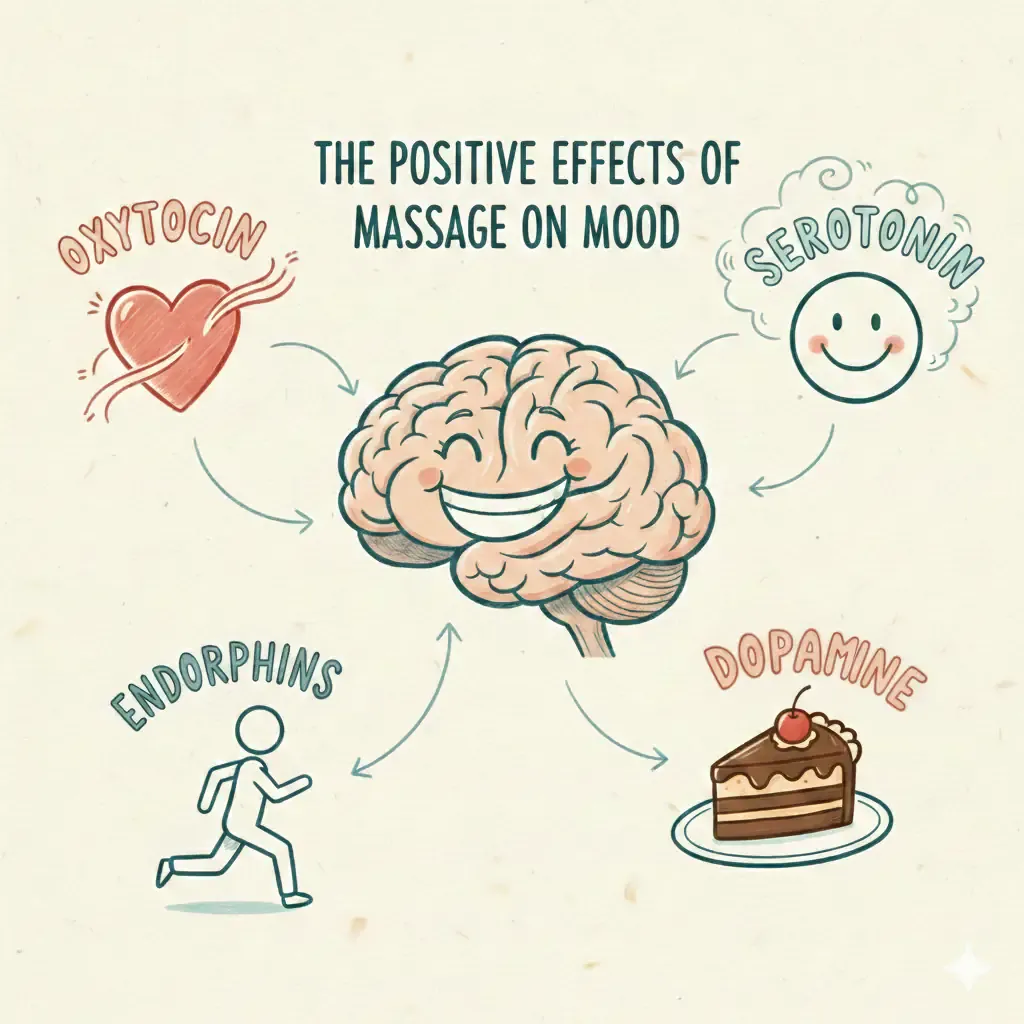
During a massage, your body begins to release a cocktail of "feel-good" chemicals. These are the same neurotransmitters that many clinical treatments aim to target, but massage triggers them through the power of the nervous system:
- Endorphins: These flood your system as your body’s natural painkillers and mood elevators. Think of them as a natural way to take the edge off physical and emotional discomfort.
- Serotonin: Levels of this "calm hormone" spike during a session. Since low serotonin is often linked to depression and anxiety, this boost is essential for stabilizing your mood and improving your sleep.
- Dopamine: Often called the "reward chemical," dopamine helps you feel motivated and clear-headed. It’s what provides that sense of accomplishment and satisfaction.
- Oxytocin: Known as the "cuddle hormone," oxytocin reduces stress and fosters a sense of connection and security.
How Massage Triggers the Change
When intentional pressure is applied to your muscles, it sends a direct signal to your brain to move from "survival mode" to "rest mode." Your nervous system shifts from the sympathetic (fight or flight) to the parasympathetic (rest and digest). This is the exact moment the "hormone party" begins, flipping the switch from anxiety to calm.
What This Means for Your Mental Health
The results are more than just a fleeting feeling; they are measurable shifts in your physiology:
- Cortisol Reduction: Massage can drop cortisol (the stress hormone) levels by approximately 30%. That constant "hum" of anxiety in the background finally gets quiet.
- A Natural Lift for Depression: For mild to moderate depression, the combination of human touch and increased serotonin can be incredibly restorative.
- Better Sleep Patterns: When your serotonin is balanced, your body can produce melatonin more efficiently. This means not just falling asleep, but staying asleep.
- Emotional Resilience: Regular sessions help train your nervous system to recover from stress more quickly. You become better equipped to handle whatever life throws at you.
The Cumulative Effect
While one massage feels wonderful, the real magic happens with consistency. Regular sessions create lasting changes in your brain chemistry, helping you maintain a higher "baseline" of happiness and stability. Over time, people often report feeling more balanced and less reactive to daily stressors.
Making It Work For You
To get the most mental health benefits, I recommend:
- Prioritising Consistency: Think of massage like any other form of exercise or therapy—it works best when it's an intentional part of your life
- Choosing the Right Style: For mood-boosting, I suggest styles that allow you to fully "melt" into the table.
- In a world where we are constantly overwhelmed, massage offers a natural way to reset your mental state using your body’s own chemistry. It isn't just pampering; it is healthcare for your mind.
The next time you wonder if you "deserve" a massage, remember that it is medicine—the kind that comes with zero side effects and leaves you feeling genuinely like yourself again.
Reference:
https://scholars.indianastate.edu/cgi/viewcontent.cgi?article=1002&context=honorsp